ServicesCrowns & Bridges
Crowns & Bridges in Oxford, MA
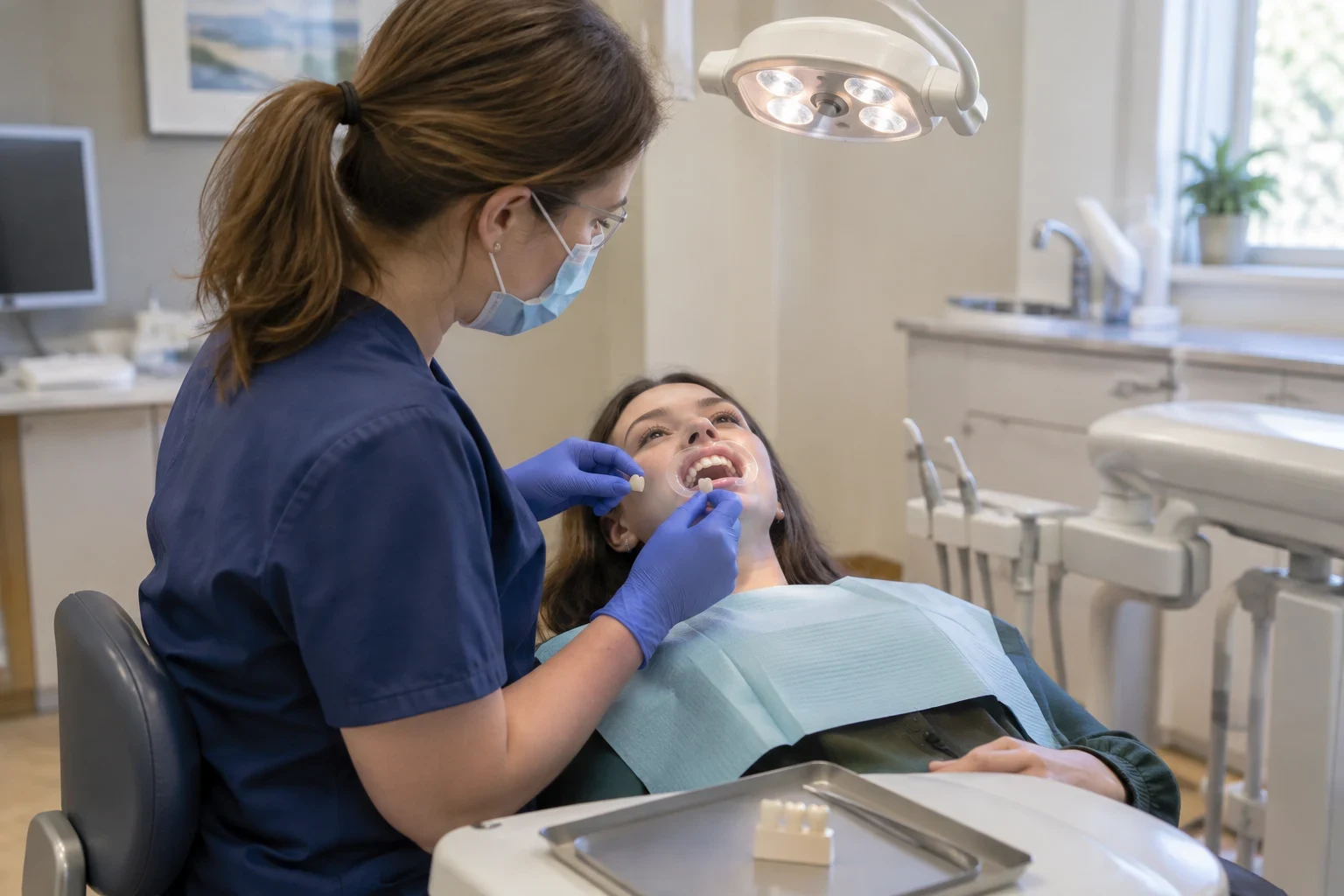
A crown caps a cracked or heavily filled tooth so it can handle full chewing force again. A bridge fills the space left by a lost tooth, using the healthy teeth on each side as supports. We spot these problems early, lay out every option and help you plan timing and cost.
When a Crown or Bridge Is the Right Call
A filling does the job as long as plenty of healthy tooth surrounds it. Once a cavity or old filling spans more than about half the tooth's width, the thin walls left behind bend a little with every bite. That repeated bending is what starts cracks, and a cracked cusp can split down toward the root. A crown covers the entire tooth and braces those walls, which is why we usually recommend one after a root canal or when a large filling breaks down.
A bridge handles a different problem. After a tooth is lost, the gap does not stay stable: the neighbors gradually lean toward the open space, and the tooth in the opposite jaw can rise out of its socket with nothing to bite against. A fixed bridge places crowns on the adjacent teeth, called abutments, and suspends a replacement tooth, called a pontic, between them. Patients from Oxford and towns like Webster and Auburn often reach us while a cracked or missing tooth is still an annoyance rather than an emergency, and that is the easiest point to plan the work.
What Goes Into Every Crown and Bridge Case
- 01
Diagnosis on X-rays
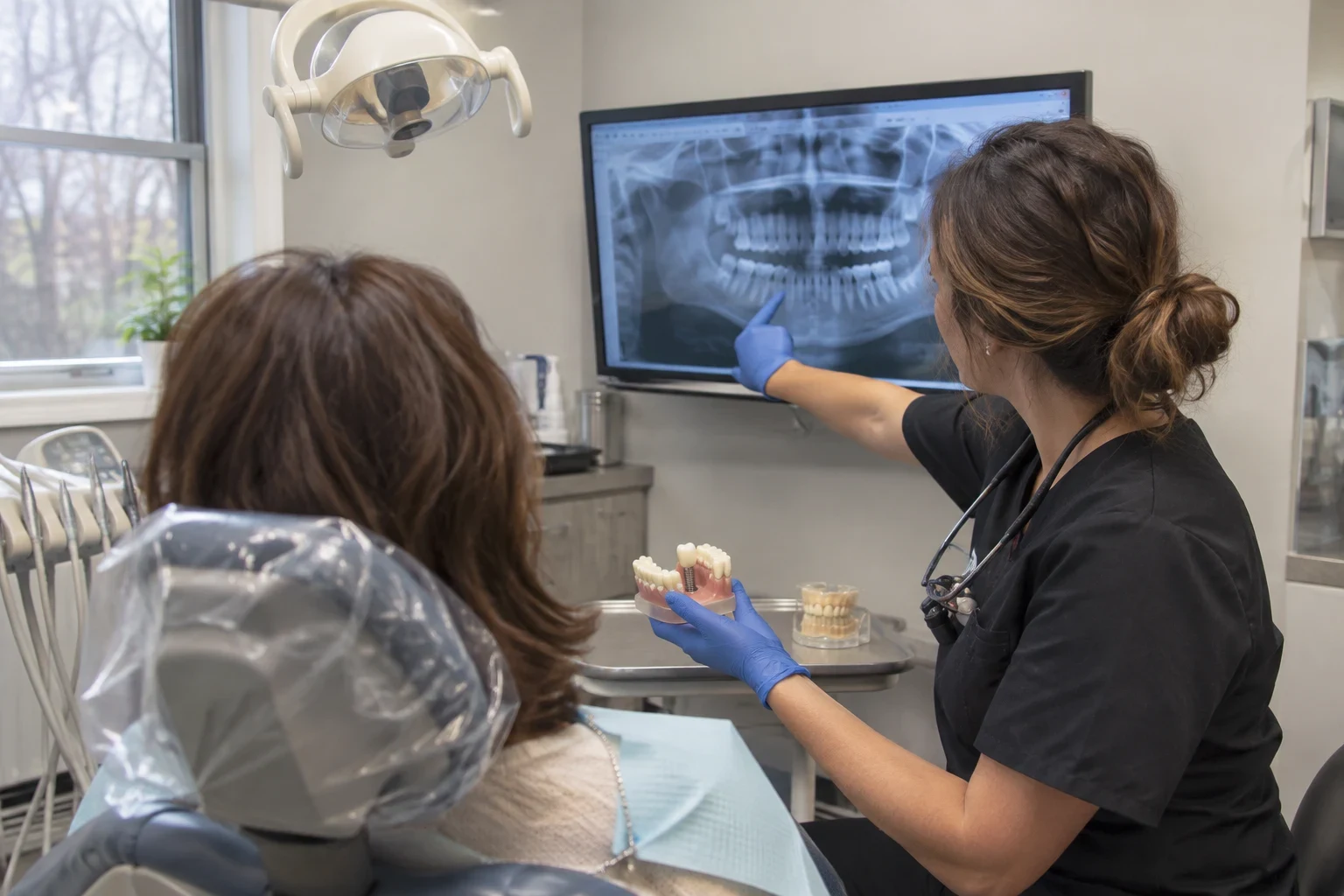
Before recommending anything, we examine the gum tissue and read the root and surrounding bone on X-rays. Those images show whether the foundation is strong enough to carry a crown or anchor a bridge.
- 02
A clear material choice
Zirconia holds up best on back molars, lithium disilicate ceramic matches natural enamel on front teeth, porcelain fused to metal sits between the two, and gold suits heavy biters. We spell out the tradeoffs and you make the call.
- 03
Core buildup when needed
Deep decay or a large old filling can leave too little tooth for a crown to hold onto. In that case we rebuild the core first, giving the crown a solid base.
- 04
Temporary crown
Once the tooth is shaped, a temporary goes on so you can chew and smile normally while the lab makes the final crown or bridge.
- 05
Fit and bite adjustment
Before cementing, we check the margin at the gumline, the contacts against neighboring teeth and how your bite lands. We adjust until it feels like your own tooth.
Questions about Crowns & Bridges?
Call(508) 625-9288Signs a Tooth May Need a Crown or Bridge
A sharp twinge as you let go of a bite
Pain that flashes when you release pressure on something chewy is a classic clue to a cracked tooth. Capping it with a crown braces the cusps so the fracture line stops growing.
A big filling that keeps chipping
Over years of hot and cold, older silver fillings swell and shrink, and that movement can pry the cusps apart. If a piece of filling has broken or a corner of the tooth has snapped off, too little may remain to hold another filling.
A back tooth that has had a root canal
Molars and premolars turn brittle after root canal treatment. Most of them need a crown so they do not fracture under chewing force.
An open space where a tooth used to be
When the teeth beside a gap begin to lean or food keeps wedging into it, a bridge fills the space and halts the drift.
A dark line or rough edge on an old crown
Gum recession or decay along the edge of an aging crown lets bacteria slip underneath. Replacing it early saves the tooth underneath from bigger damage.
How Crown and Bridge Treatment Works
- 1
Exam and options
We look at the tooth, take X-rays and go over the choices, whether that is a crown, a bridge or something else. Before you go, we hand you a written plan that breaks the treatment into visits with the fee for each one.
- 2
Benefits and scheduling review
We check what your insurance covers and how much of your yearly maximum remains. When it makes sense, we can split the work so part of it lands in the next benefit year.
- 3
Preparation appointment
Once the area is numb, we clear out any decay, reshape the tooth and capture an impression or digital scan. A temporary crown or bridge protects the tooth until the final piece is ready.
- 4
Final placement
The lab typically returns the restoration in about two weeks. We take off the temporary, confirm the fit and shade, fine-tune your bite and cement the crown or bridge permanently.
- 5
Ongoing checks
During routine exams and cleanings we inspect the crown margins and the surrounding gum, catching small problems while they are still easy to fix.
What Moves the Price of a Crown or Bridge
Three things set most of the fee: how many teeth the restoration spans, which material the lab uses and what we uncover once the old filling comes out. Before any drilling, you get the full figure on paper, so the total holds steady once treatment starts. Booking the work ahead of time also gives you room to line up insurance benefits and financing.
- Number of units
- Each crowned tooth counts as one unit. A standard three-unit bridge pairs two crowned abutment teeth with one pontic between them, and every extra missing tooth in the span adds another unit.
- Restoration material
- Lab fees vary between zirconia, lithium disilicate, porcelain fused to metal and gold. We tell you plainly when a higher-cost material earns its keep and when a simpler one will do the same job.
- What sits beneath the old filling
- Decay that runs deep can mean a core buildup before the crown, and an inflamed or infected nerve may need a root canal first. Most of the time the X-rays flag this before your preparation visit.
- Insurance rules
- We accept most dental insurance plans. Your annual maximum, any waiting period and the plan's replacement limit on older crowns all change your share.
- Ways to pay over time
- For patients with no coverage, there is our Office Dental Plan for patients without insurance. If you would rather make monthly payments, the CareCredit Patient Payment Plan is another option we offer.
Common Questions About Crowns and Bridges
How many years can I expect from a new crown?
Lifespan comes down to three things: the material, how carefully you clean where the crown meets the gum and whether you clench or grind at night. Plenty of crowns stay in service for more than ten years. When one does fail, fresh decay along the margin is the usual cause, so keeping up with checkups protects it.
Will the crown appointment be painful?
We numb the tooth completely before shaping it, so what most patients notice is pressure and a buzzing feeling, not pain. For a few days after, the gum may feel sore or the tooth may react a little to cold. Both settle on their own.
Could a larger filling work instead of a crown?
In some cases it can. When plenty of sound tooth structure is left, a filling is the simpler and less costly fix, and we will say so. If the remaining walls are thin or already cracked, a filling cannot keep them from bending under bite force, and a crown protects the tooth better.
How do I look after a temporary crown?
Skip sticky foods such as caramel and taffy, and favor the opposite side when you chew. Pull floss out through the side of the contact instead of lifting it back up, which can pop the temporary off. If it does come loose, hold on to it and phone us to get it reseated.
Do I need a bridge for a missing back tooth that does not show?
Usually it is worth it, since the issue is chewing and bite stability, not appearance. An empty space lets the neighboring teeth lean in and the tooth above or below drift toward the gap, which throws off your bite and creates spots that trap food. Your X-rays can show us whether that shifting has already started.
Plan Your Crown or Bridge Before It Breaks
A tooth that is cracked or heavily filled is easier and less costly to restore before it splits. Give us a call to book an appointment and get a clear plan for the tooth.