ServicesExams & Cleanings
Dental Exams & Cleanings in Oxford, MA
A cleaning removes the hardened tartar your brush can't reach. An exam measures your gums and checks between teeth with X-rays. Together they find the small cavity or loose filling now, so you can plan and budget the fix instead of meeting it as a toothache.
Why the Cleaning and Exam Go Together
Bacteria form a sticky layer on your teeth every day. If that layer sits for a day or two, calcium and phosphate from saliva begin to mineralize it into calculus, the hard yellow or gray deposit that builds up behind the lower front teeth and at the gumline. Brushing and flossing can't break it loose at that point. A hygienist has to scale it away, because as long as it stays put, the gums stay irritated and bacteria can push deeper under the gum tissue.
The exam covers what hasn't started to hurt. A cavity forming where two back teeth touch tends to appear on a bitewing X-ray well before you notice anything. Found early, it is usually a small filling. Found late, it may need a crown, a root canal or an extraction. Each visit adds to your record, so we can compare this year's images and gum readings with last year's and tell what is changing.
We keep it straightforward. You see what we found, we tell you which items need attention soon and which can be watched, and we help you fit the work into a schedule and budget that make sense for you.
What's Included in Your Visit
Scaling and polishing
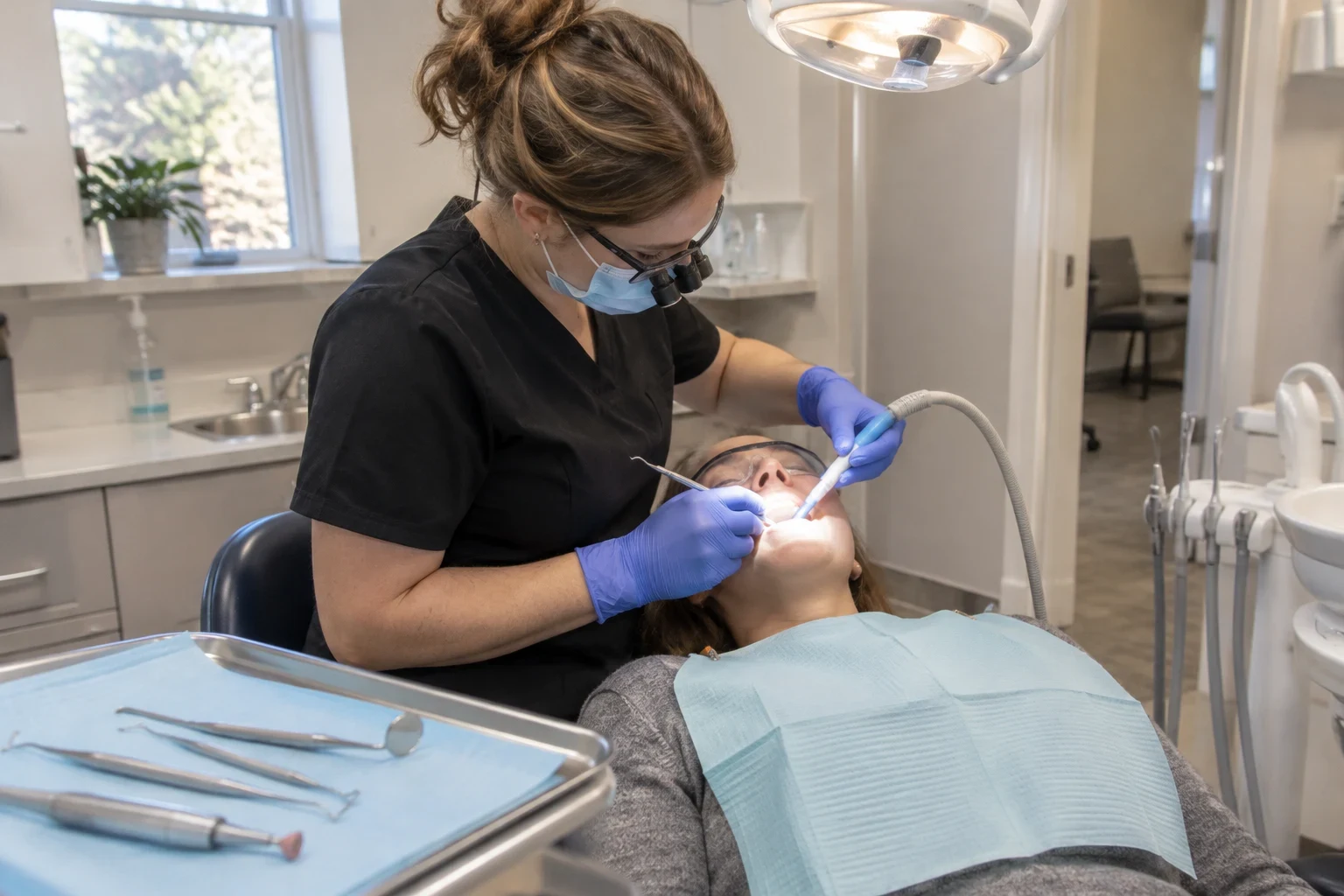
The hygienist removes tartar above and just below the gumline with hand scalers or an ultrasonic scaler, which uses vibration and a water spray to break calculus loose. A polish then smooths the surface so new plaque has a harder time sticking.
Gum pocket measurements
A thin probe marked in millimeters measures the space between each tooth and the gum. Healthy pockets are usually shallow, around 1 to 3 mm. Deeper readings, or spots that bleed when probed, point to gum disease and tell us whether a routine cleaning is enough.
X-rays when they're due
Bitewings show decay between teeth and the bone level around them. New patients often need a fuller set to give us a starting baseline. We take images based on your history, not on a fixed schedule for everyone.
Checking existing work
We look at the edges of old fillings and crowns, where a small gap lets bacteria slip underneath. A cracked or leaking filling is far easier to replace than the tooth decay it hides.
Oral cancer screening
The dentist checks your tongue, cheeks, floor of the mouth and the soft tissue of the throat for color changes, sores or lumps. It takes a minute or two and is part of every exam.
A written treatment plan
If we find something, you leave with a list of what we saw, what we recommend and how urgent each item is, so you can sort the timing with your insurance or budget.
Signs You're Due for an Exam and Cleaning
Gums bleed when you brush or floss
Bleeding is the most common early sign of gingivitis, usually caused by tartar irritating the gumline. At this stage it typically reverses with a cleaning and better home care.
It has been more than a year
Tartar builds steadily, and small cavities grow without pain. The longer the gap, the more likely the visit turns up work that could have been smaller.
Twinges with cold or sweets
Sensitivity can come from early decay, worn enamel or gum recession exposing the root surface. An exam tells you which one it is, and the fixes are different.
Food keeps catching in one spot
A new food trap often means a cavity has opened a gap, a filling edge has broken down or a tooth has shifted. It is worth looking at before it turns sore.
Bad breath that doesn't go away
Persistent odor often comes from bacteria living in tartar and deep gum pockets, where mouthwash doesn't reach.
How the Visit Runs
- 1
Book by phone
Call to set your appointment. Have your insurance card handy if you have one, and we can tell you what to bring. New patients should mention any medications, since some affect gums and bleeding.
- 2
History and images
We go over your medical history and any concerns, then take whatever X-rays are due. If you have recent X-rays from another office, let us know and we can try to use them.
- 3
Cleaning with the hygienist
Gum measurements, scaling, polishing and flossing. Tell us if any area is sensitive and we will slow down or numb the spot. Fluoride is offered at the end.
- 4
Exam with the dentist
The dentist reviews your X-rays and pocket readings, checks every tooth and existing restoration, and does the cancer screening.
- 5
Your plan, in order of priority
We show you what we saw, on screen or on the X-ray, and sort it into now, soon and watch. Nothing gets scheduled until you decide.
What Affects the Cost of a Checkup
Routine visits are the most predictable appointments we schedule, though a few details change what yours includes. We accept most dental insurance plans, and since many plans cover preventive care on different terms than fillings or crowns, we can look up what yours pays for. If you don't carry insurance, ask about our Office Dental Plan for patients without insurance. For treatment you would rather pay off over time, we also offer the CareCredit Patient Payment Plan.
- New patient or returning
- A first visit usually includes a fuller set of X-rays and a complete chart, so it involves more than a routine recall visit.
- Which X-rays are due
- Bitewings and a full series are separate procedures. How often you need them depends on your decay history and how long since your last set.
- Gum health
- If pockets are deep and tartar sits well below the gumline, a regular cleaning can't reach it. That calls for scaling and root planing, often done by section with numbing, and it is billed differently.
- Your coverage
- PPO plans vary in how many cleanings and X-rays they include per year. We can look at your benefits before work is done so the bill isn't a surprise.
Exams and Cleanings: Common Questions
Something not covered here? (508) 625-9288
How often should I get a cleaning?
Many people do well with a visit every six months. If your gums measure deeper or tartar builds fast, a shorter interval keeps things from sliding. We base the recommendation on your own readings and X-rays.
Does a cleaning hurt?
For most patients it feels like scraping and pressure, not pain. Inflamed gums can be tender, and that is usually the reason they bleed. If an area is sore, tell us and we can work more slowly or numb it.
Are dental X-rays safe?
Digital bitewings use a very low dose of radiation, and we only take images when they are due for your situation. They show decay between teeth and bone loss that can't be seen by looking.
What happens if you find a cavity?
We show it to you, explain how deep it looks and give you options. A small cavity is usually handled with a filling at a separate visit. If several things need work, we put them in order of urgency so you can plan around your benefits or budget.
Can my kids be seen too?
Yes. Children's checkups follow a similar pattern with extras like sealants and fluoride suited to growing teeth. See our Kids' Dentistry page for what those visits include.
Get Ahead of Your Next Dental Bill
A cleaning and exam is the cheapest way to find out what your teeth need and when. Patients come to us from Oxford, Webster, Auburn and the surrounding towns.