ServicesFillings
Dental Fillings in Oxford
A small cavity is the cheapest problem a tooth will ever have. We find decay early, remove it, and rebuild the tooth with tooth-colored composite that bonds to the enamel. You see the x-ray, hear the options, and know the cost before we pick up a drill.
Why a Small Cavity Needs a Filling Now
Plaque bacteria feed on sugar and give off acid. Over time that acid breaks down enamel, the hard outer shell of the tooth, and then reaches the dentin below it. Dentin is softer, so decay moves faster there, and it is full of microscopic tubules that lead toward the nerve. That is why a cavity can stay quiet for months and then start reacting to cold almost overnight.
Filling the tooth halts the damage. We take out the softened structure, clean the prepared area, and rebuild it with material that seals out new bacteria. If we catch the decay while it is still in the enamel or the outer dentin, a filling is typically the only treatment the tooth will need.
When a cavity grows large enough to weaken a cusp or reach the pulp, a filling may not hold up under chewing. At that point a crown is the more reliable repair, which we explain on our Crowns & Bridges page. Scheduling the small fix early keeps the tooth from reaching that stage.
What Your Filling Appointment Includes
Diagnosis you can see
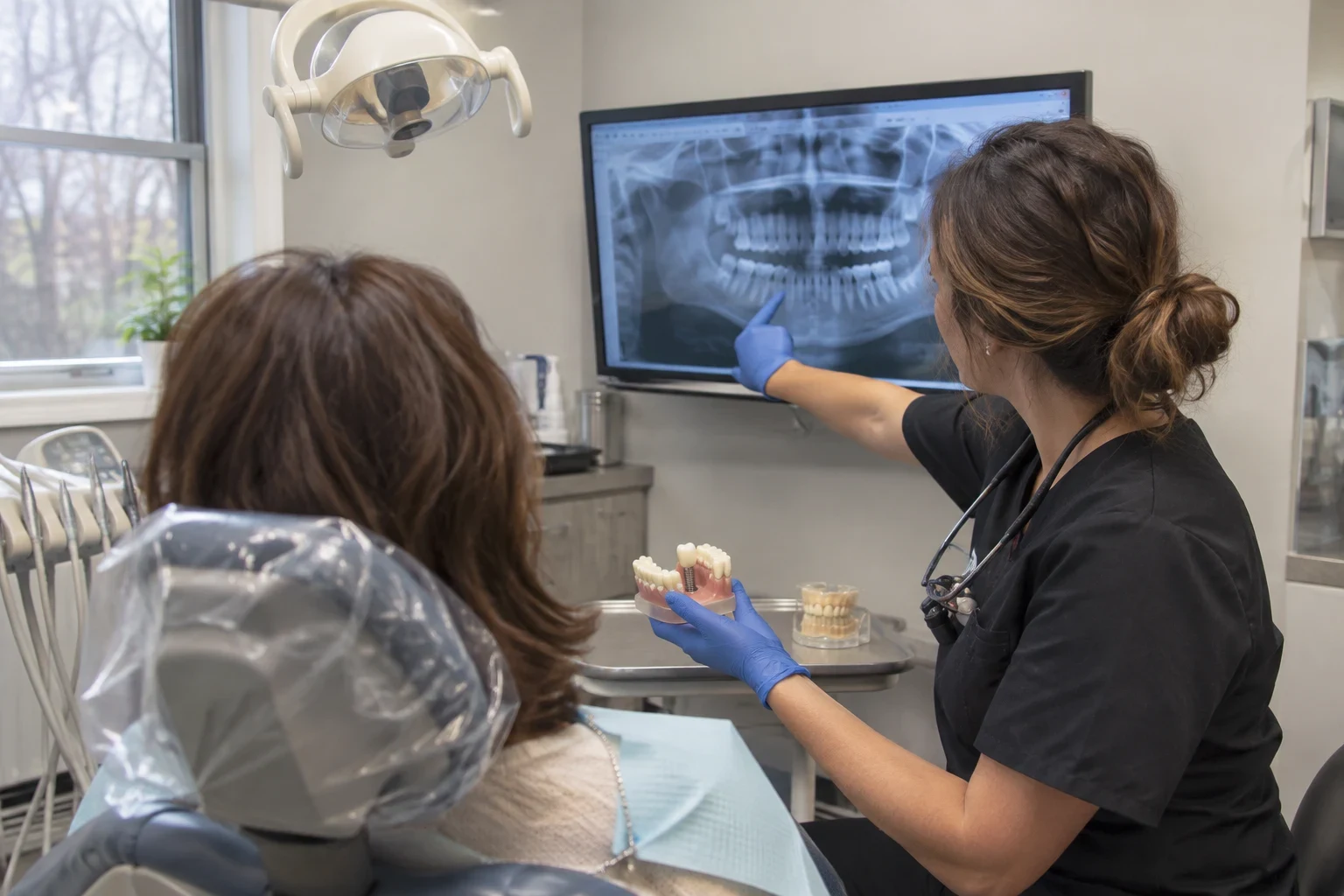
We use bitewing x-rays and an intraoral camera to show you where the decay is and how deep it goes. You look at the same image we do.
Local anesthetic
We numb the tooth and the surrounding gum before any drilling. For very shallow enamel cavities, some patients choose to skip it, and we talk that through first.
Composite resin restoration
Composite is a resin filled with fine glass particles, matched to your tooth shade. It bonds chemically to enamel and dentin, so we can remove less healthy tooth than older metal fillings required.
Glass ionomer where it fits
Near the gumline, or on root surfaces where keeping the area dry is hard, glass ionomer can be the better material. It tolerates moisture and slowly releases fluoride.
Bite check and polish
We check your bite with articulating paper, adjust any high spots, and polish the surface smooth so it does not trap plaque or feel rough to your tongue.
Signs a Tooth May Need a Filling
- A sharp twinge with cold or sweets
- Short, quick sensitivity often means decay has reached dentin. The pain fades fast, which makes it easy to ignore.
- Food catching in the same spot
- Floss that shreds or food that packs between two teeth can point to a cavity breaking down the contact between them.
- A dark spot or chalky patch
- White chalky areas are early mineral loss. Brown or gray spots that feel sticky to an instrument are often active decay.
- An old filling with a rough edge
- Fillings wear and their margins can open up. Bacteria get under the edge, and new decay forms where you cannot see it.
- Pain when biting down
- This can mean a cracked tooth or a deep cavity. It needs a look soon, because it may call for more than a filling.
How a Filling Visit Runs
- 1
Exam and plan
We confirm the cavity on x-ray, explain the material we recommend and why, and go over the cost and what your insurance is likely to cover.
- 2
Numbing and isolation
After the anesthetic takes effect, we isolate the tooth with cotton rolls or a rubber dam. Composite bonds poorly to a wet tooth, so this step matters.
- 3
Removing the decay
We remove soft, infected tooth structure and stop when we reach sound dentin. The shape of the preparation follows the decay, not a fixed pattern.
- 4
Bonding and layering
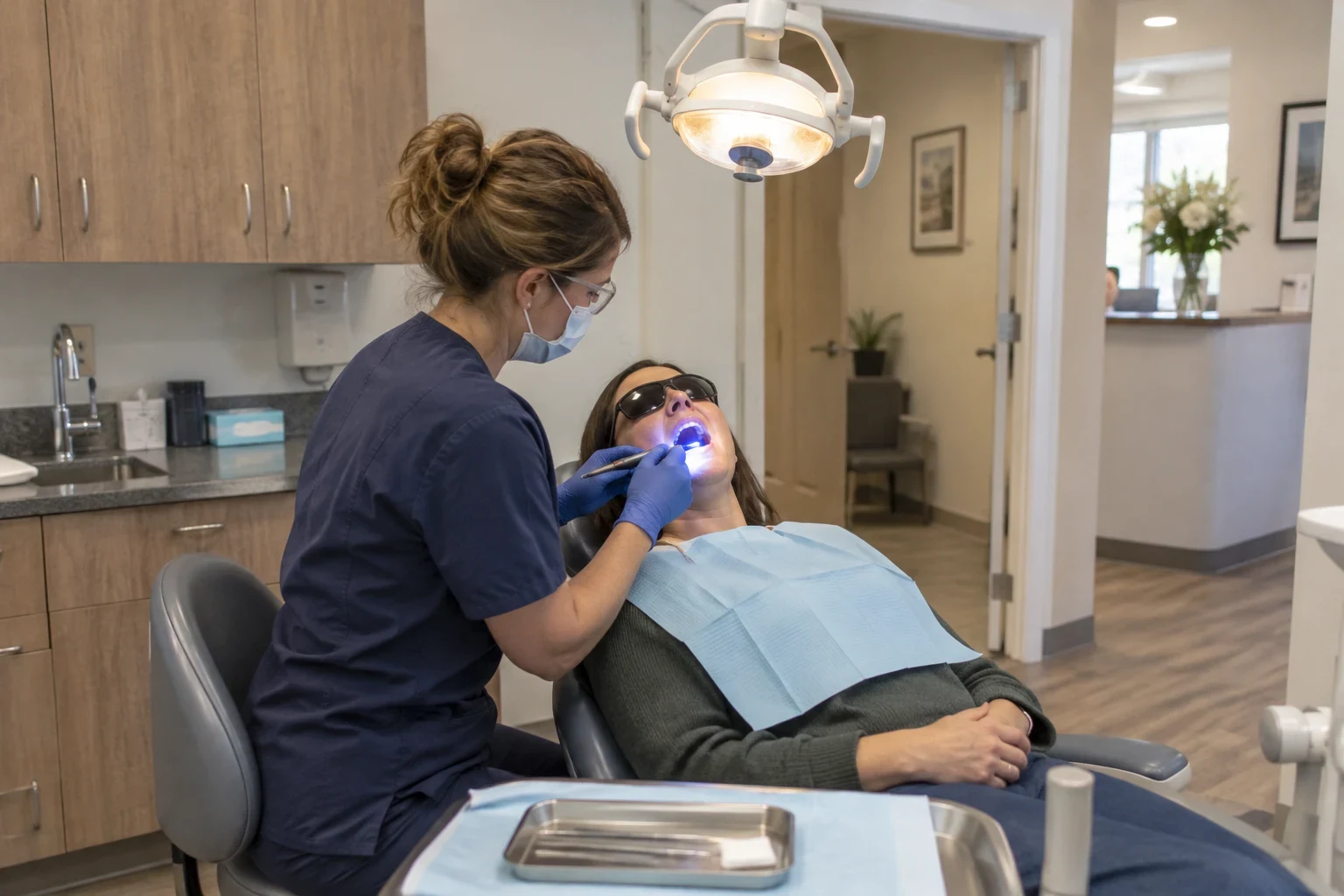
We etch the surface, apply a bonding agent, then place composite in thin layers. Each layer is hardened with a blue curing light, which limits shrinkage and gaps.
- 5
Shaping and checking the bite
We carve the filling to match your natural grooves, check how your teeth meet, and polish. Most single fillings are done in one visit.
What Sets the Price of Your Filling
Two things drive most of the fee: which tooth needs work and how many of its surfaces the decay has reached. We go over the number with you before any treatment begins, so nothing shows up later as a surprise. We accept most dental insurance plans. Patients without coverage can budget through our Office Dental Plan, and the CareCredit Patient Payment Plan offers another way to spread out payment.
- Surfaces involved
- Decay limited to the biting surface needs a one-surface filling. When it spreads into the space between two teeth, the filling may cover two or three surfaces, which adds chair time and material.
- Where the tooth sits
- Molars at the back are tougher to reach and to keep dry than front teeth. They also take the heaviest chewing load, so the restoration has to be built to handle it.
- Choice of material
- Composite resin and glass ionomer carry different fees. Some insurance plans also pay differently for tooth-colored material on back teeth, and we check that for you.
- Grouping the work
- If several cavities sit on the same side of the mouth, we can often treat them in one visit with one round of anesthetic, which cuts down on return trips.
Fillings: Common Questions
- Will I feel pain during a filling?
- Most patients say the injection is the only thing they notice, and we deliver it slowly so it stays comfortable. After the anesthetic sets in, you will sense pressure and some vibration, not pain. A little soreness around the tooth for a day or two is normal and fades on its own.
- How much time should I set aside?
- Plan on less than an hour for one small filling, numbing included. A filling that covers several surfaces, or more than one tooth in the same visit, takes longer. We give you a time estimate when you call to set the appointment.
- Do my old silver fillings need to come out?
- Not because of their color alone. An amalgam filling with sealed, intact edges can keep doing its job for a long time. We suggest replacing one when it has cracked, started leaking at the margin, or has new decay beneath it, and we show you that on the x-ray or camera image.
- How soon can I eat afterward?
- The curing light fully hardens composite before you get out of the chair, so the material itself is ready. The real concern is numbness, because it is easy to bite your lip or tongue without feeling it. Wait until sensation comes back, usually within a few hours, then eat as you normally would.
- Does dental insurance pay for fillings?
- Most plans list fillings as a basic service and pay a portion after you meet your deductible. We look up your plan's coverage and tell you your share before we start. Patients without insurance can ask about our Office Dental Plan.
Treat the Cavity While It Is Still Small
A filling today is a shorter, simpler visit than the crown or extraction a neglected cavity can lead to. Families from Oxford and nearby towns like Webster and Auburn can book with us by phone.