ServicesKids' Dentistry
Kids' Dentistry in Oxford, MA
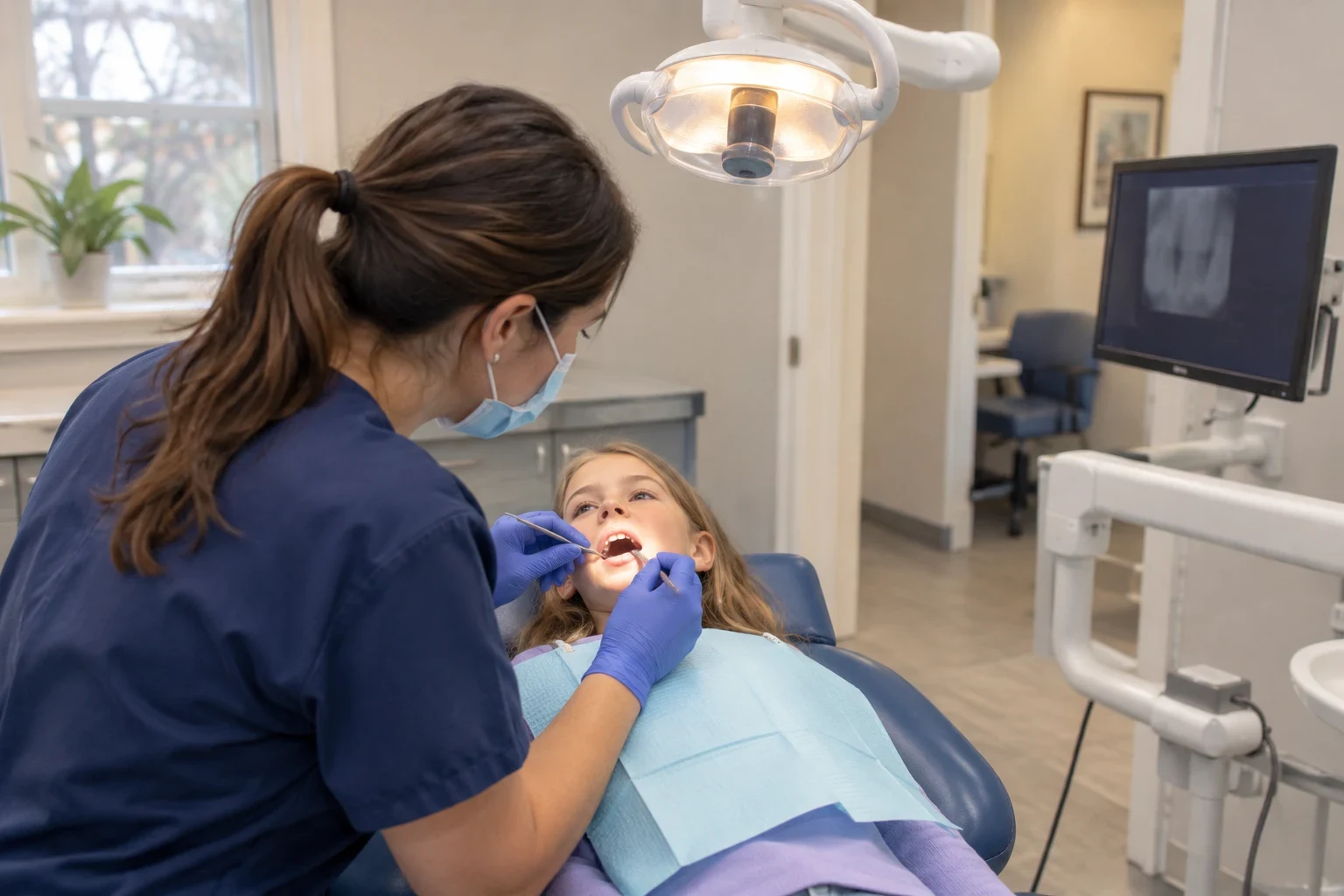
We see children from the first tooth through the teen years. Regular checkups, fluoride and sealants keep cavities small or stop them before they start, and you leave each visit knowing what comes next and roughly when, so nothing sneaks up on your family's budget.
Dental care that grows with your child
Baby teeth have thinner enamel than adult teeth, often about half as thick. Decay that would take a year or more to reach the nerve of an adult molar can get there in months in a child. That is why we look closely and often, and why small findings get handled while they are still small.
Our kids' dentistry covers the basics done carefully: exams, cleanings, fluoride varnish, sealants on new molars and tooth-colored fillings when a cavity does form. We also watch how the jaw and bite are developing. Families come to us from Oxford and towns like Webster, Auburn and Charlton, and most leave the first visit with a simple schedule for the next year or two.
Planning ahead matters here. A sealant placed on a six-year molar costs far less, in money and in a child's patience, than a filling on that same tooth at age nine.
What a kids' visit includes
Exam and growth check
We check every tooth surface, the gums, the tongue and the bite. We note which baby teeth are loosening and which permanent teeth are on the way, so you know what to expect over the next few months.
Gentle cleaning
We remove plaque and the hardened tartar that brushing misses, usually along the lower front teeth and the gumline of the back molars. For young children we keep it short and explain each tool before it touches a tooth.
Fluoride varnish
A thin coat of fluoride is painted on and sets in seconds. It helps rebuild early soft spots in the enamel before they turn into true cavities.
Sealants on new molars
Molars have deep grooves that toothbrush bristles cannot reach. A sealant is a thin resin that flows into those grooves and hardens under a curing light, closing them off from food and bacteria. We usually place them on the six-year and twelve-year molars soon after they come in.
X-rays only when they answer a question
Small bitewing X-rays show decay between back teeth, where it hides from the eye. How often we take them depends on how old your child is and how prone those teeth have been to decay, rather than a set yearly routine.
Small fillings when needed
If we find a cavity, we use tooth-colored composite and remove only the decayed part. Our Fillings page explains the material and the steps in more detail.
Signs your child should be seen
- Chalky white spots near the gums
- Dull white bands along the gumline are often the first sign of enamel losing minerals. Caught at this stage, fluoride and better brushing can often reverse it.
- Brown or gray spots on a tooth
- These usually mean decay has broken through the enamel. A small cavity is a quick filling; a large one may reach the nerve.
- Wincing at cold drinks or sweets
- Sensitivity in a child often points to a cavity or worn enamel. Kids rarely describe it clearly, so watch for chewing on one side or avoiding certain foods.
- A tooth that darkened after a fall
- A baby tooth that turns gray or yellow weeks after a bump may have an injured nerve. We check it with an exam and an X-ray to see whether the tooth underneath is safe.
- A second row of front teeth
- Sometimes a permanent lower incisor pushes through on the tongue side while the baby tooth in front of it is still firmly in place. The baby tooth often loosens and falls out by itself, but when it stays put, we may need to remove it so the new tooth can move forward.
How a visit goes
- 1
Booking by phone
When you call, we ask your child's age, any concerns and your insurance details so we can check coverage before you arrive. If this is a new patient visit, we will tell you what to bring.
- 2
Settling in
Toddlers are often examined sitting on a parent's lap. Older children sit in the chair, and we show them the mirror, the light and the air syringe before we use them.
- 3
Exam, cleaning and fluoride
We clean, take any X-rays that are needed and do the exam. Fluoride varnish goes on last, and we will tell you how long to wait before your child eats.
- 4
Your plan in writing
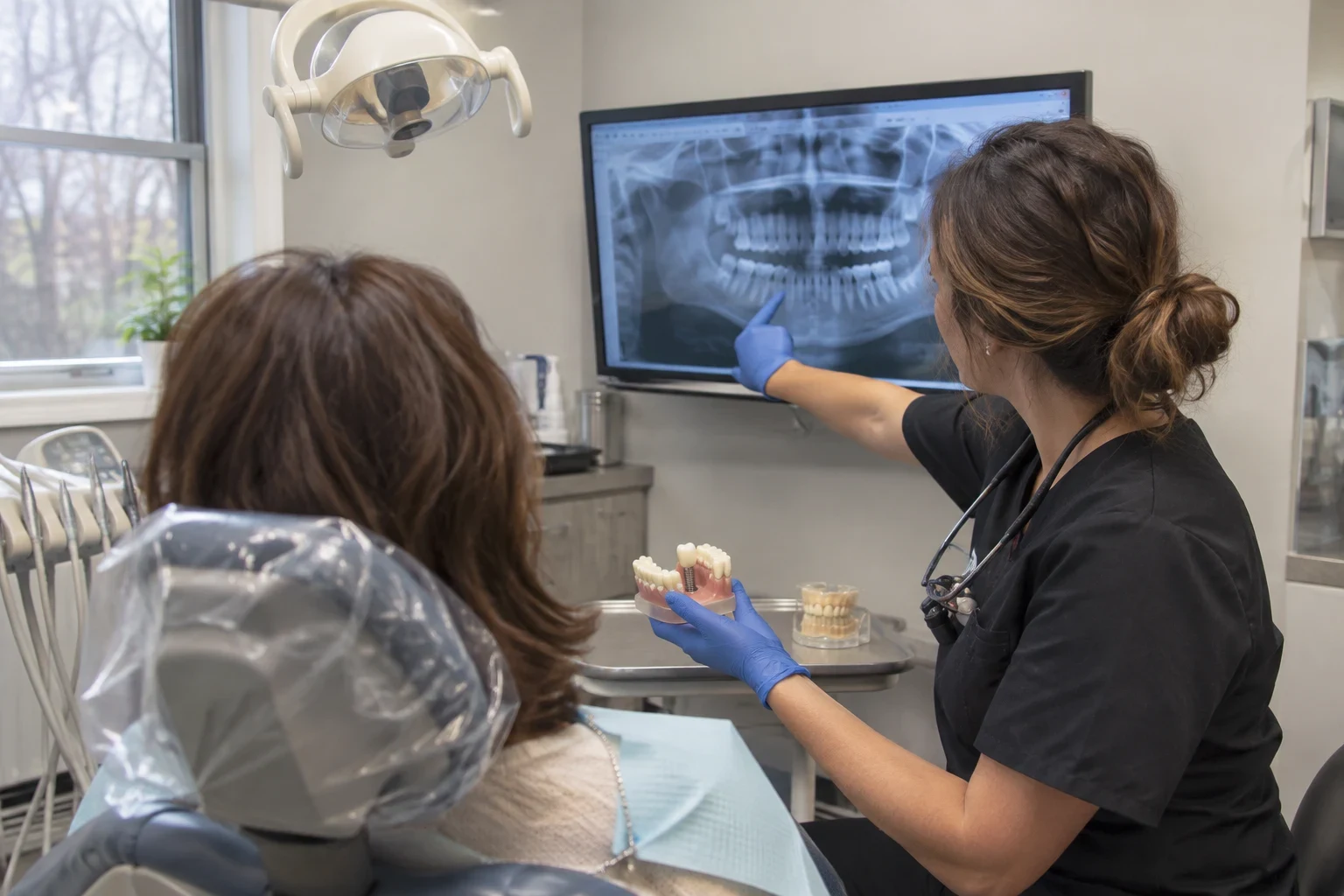
We walk you through what we saw, using the X-rays or photos where they help. If treatment is needed, you get a written estimate listing each item, and we schedule it in the order that protects the teeth most.
What affects the cost of a child's care
Most children's visits are preventive, and checkups, cleanings and fluoride are usually the least expensive part of dentistry. Costs climb when care is delayed and early soft spots turn into fillings. Before any treatment, we hand you a written estimate so the numbers are clear ahead of time.
- Your insurance plan
- We accept most dental insurance plans. Plans often treat preventive visits and fillings at different coverage levels, so we confirm your benefits before any treatment starts.
- Which X-rays are needed
- A low-risk child with healthy teeth needs fewer images than a child with a history of cavities. We take only the X-rays that help us make a decision.
- Number of teeth involved
- Sealants and fillings are each priced by the tooth. Sealing two new molars costs less than sealing four, and a single small filling costs less than several.
- Options for families without coverage
- If your family has no dental insurance, you can join our Office Dental Plan for patients without insurance. For bigger treatment, the CareCredit Patient Payment Plan lets you pay in smaller amounts over time.
Questions parents ask
- When should my child first see a dentist?
- Plan the first visit by age one, or within six months after the first tooth appears if that comes sooner. The appointment is brief and focuses on the teeth already in, plus brushing, bottles and fluoride. It also gives your child a chance to meet us before any treatment is needed.
- Does a cavity in a baby tooth really need a filling?
- Usually, yes. Back baby molars often hold their place until roughly age 10 to 12, which is years of chewing. Left alone, decay can reach the nerve, bring pain or infection and damage the adult tooth developing below. If a baby molar is lost too soon, the teeth beside it can shift into the gap the permanent tooth will need.
- Are dental X-rays safe for kids?
- Digital bitewings deliver a very small radiation dose, and we only take them when they help answer a specific question. Kids with healthy teeth and little history of decay may go a year or longer between sets.
- Can I stay with my child during the visit?
- Yes. Plenty of parents stay in the room, and toddlers are usually checked while sitting on a parent's lap. Some older children are more relaxed on their own, and we go with what works for your family.
- Do sealants hurt or need numbing?
- No. We clean the tooth, apply a mild gel to prepare the surface, then paint on the resin and harden it with a curing light. Nothing is drilled and no shot is given, and each tooth typically takes just a few minutes.
Put your child's next checkup on the calendar
A visit every six months keeps small problems small and lets you plan for any treatment well ahead of time. We will check your insurance and set up an appointment that fits the school week.