ServicesExtractions
Tooth Extractions in Oxford, MA
When a tooth is cracked below the gumline, badly decayed or crowding its neighbors, removing it can be the right call. We X-ray first, explain why the tooth can't be saved, plan what fills the gap, and only then schedule the extraction.
When Removing a Tooth Makes Sense
A tooth sits in a socket of bone, held there by the periodontal ligament, a thin band of fibers that acts like a shock absorber. Extraction means gently widening that socket and separating the ligament so the tooth comes out in one piece. It is a routine procedure, but it is permanent, so we treat it as the last option rather than the first.
Often a crown or a filling can still save the tooth. When it can't, because a vertical root fracture has split the root, decay has reached below the bone, or gum disease has left too little support, an extraction stops the infection and the pain at their source.
The best time to plan one is before a dull ache becomes a swollen jaw. Patients from Oxford, Webster, Auburn and Charlton who call while a tooth is just sore usually have more choices, simpler appointments and time to sort out insurance or a payment plan.
What Your Extraction Visit Includes
- 01
X-rays and a diagnosis
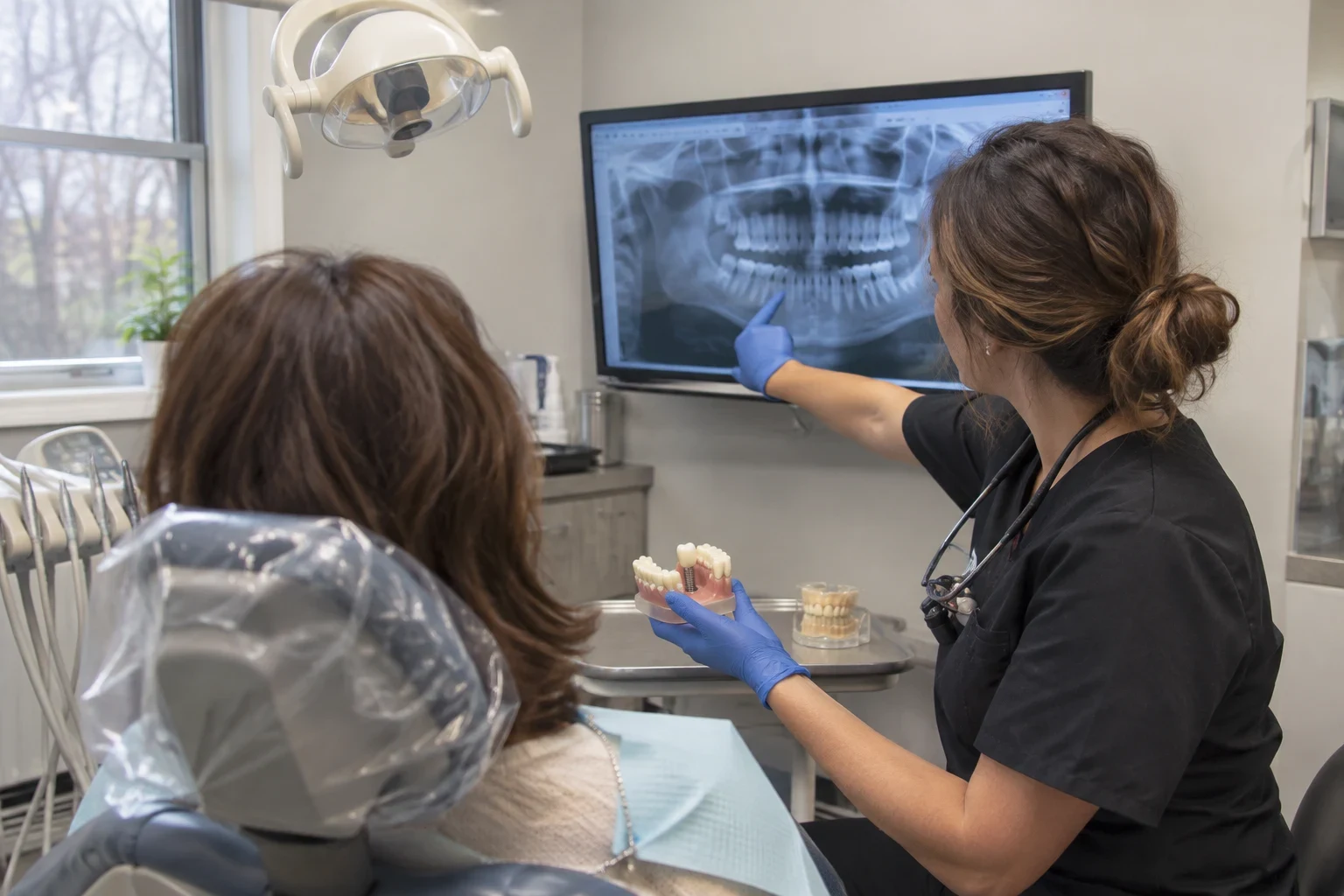
We take a periapical X-ray to see the full root, the bone around it and any infection at the tip. That image tells us whether the root is straight, curved or fused, which shapes how the tooth will come out.
- 02
A written treatment plan
You get the reason for the extraction, the alternatives we considered and the cost in writing. If a bridge or another restoration will replace the tooth, that step is in the plan too, so nothing about the next visit is a surprise.
- 03
Local anesthetic and gentle technique
We numb the tooth, the ligament and the surrounding gum with a local anesthetic and check it before starting. You'll feel pressure as the tooth loosens, not sharp pain.
- 04
Sectioning when needed
A molar with two or three roots sometimes comes out more gently in pieces. Dividing it lets each root lift out along its own path and protects the bone around the socket.
- 05
Aftercare instructions to take with you
You leave with gauze, written instructions and a clear list of what to watch for. We cover how to protect the blood clot, what to eat and when to call us.
- 06
Baby teeth for kids
Children sometimes need a baby tooth removed when it won't loosen and the adult tooth is coming in behind it. Our Kids' Dentistry visits keep that appointment short and calm.
Questions about Extractions?
Call(508) 625-9288Signs a Tooth May Need to Come Out
A fracture that reaches the root
When a break is limited to the visible part of the tooth, a crown can usually hold it together. If the split extends down the root, bacteria follow the fracture line, and there is rarely a way to seal it.
Decay too deep to restore
Once a cavity has destroyed most of the tooth or spread below the level of the bone, nothing solid remains to hold a filling or crown.
Wobbling when you chew
A tooth that moves when you bite has usually lost bone and ligament support to gum disease. Past a certain point, that support does not grow back.
Swelling or a gum pimple
A small draining bump on the gum, or puffiness along the jaw, usually signals an abscess at the end of the root. Book a visit soon, because this kind of infection won't resolve by itself.
Crowding or a stuck baby tooth
Some teeth are removed to create space, or because a baby tooth is sitting in the way of the adult tooth trying to come in.
How Extraction Day Works
- 1
Review the plan
We go over your X-ray and treatment plan again, confirm your medications and answer last questions. If you take a blood thinner, we talk about it before the visit, not in the chair.
- 2
Numb and check
The local anesthetic takes a few minutes to work fully. We test the area and wait until it is completely numb.
- 3
Loosen and remove
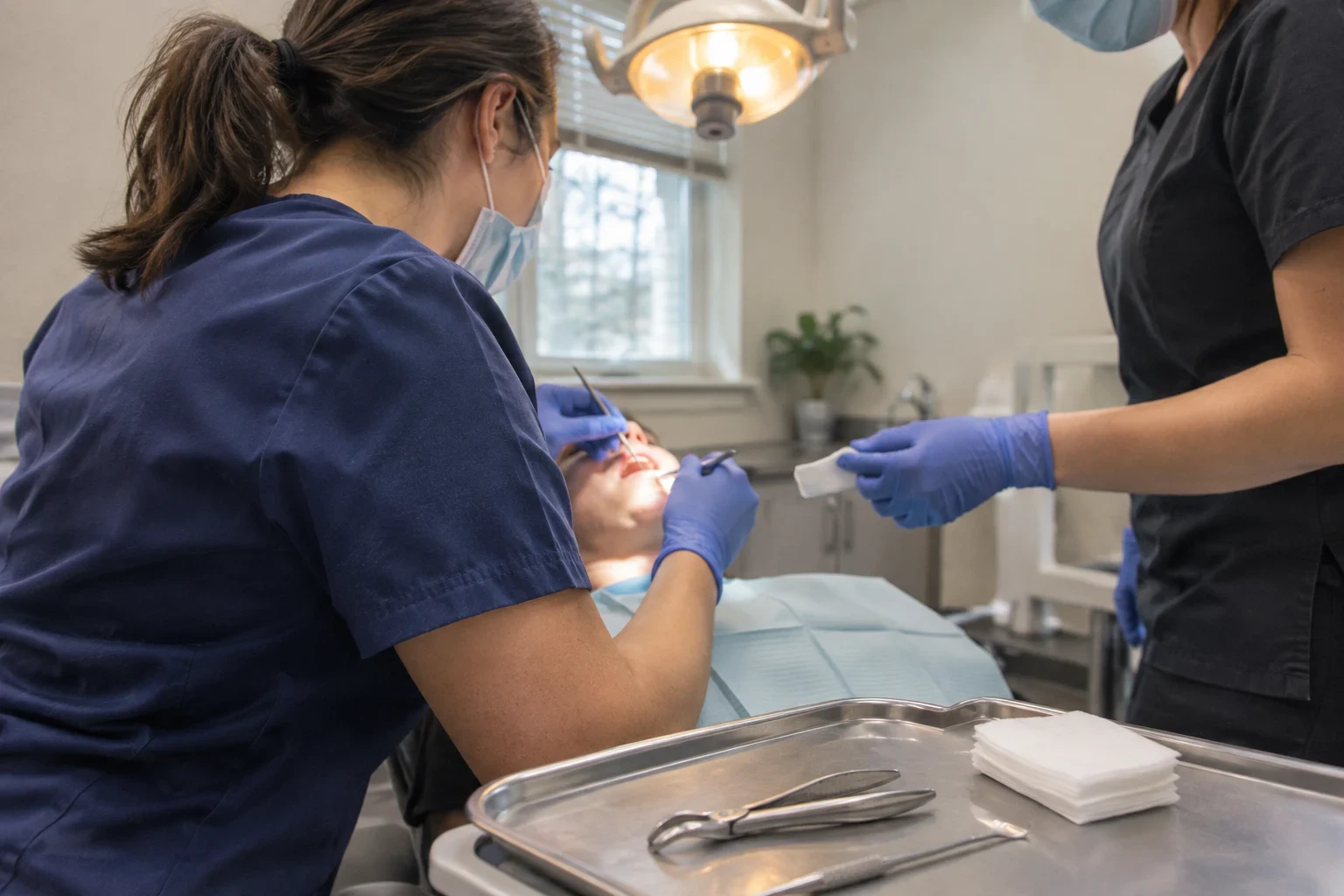
An instrument called an elevator stretches the ligament and widens the socket, then forceps lift the tooth out. Most single-rooted teeth take only minutes once numb.
- 4
Protect the socket
You bite on gauze so a blood clot forms. That clot is the base for new bone, which is why we ask you to skip straws, smoking and spitting for a few days so it doesn't dislodge and cause a dry socket.
- 5
Follow up and replace
We check healing and, when the gap needs filling, move to the next step in your plan, such as a bridge from our Crowns & Bridges service.
What Affects the Cost of an Extraction
The price depends on the tooth, how its roots are shaped and what else the visit has to handle. We put the total in your written treatment plan before the extraction is ever booked. Our office accepts most dental insurance plans. If you have no coverage, ask about our Office Dental Plan for patients without insurance, and if you would rather spread the cost out, the CareCredit Patient Payment Plan is an option.
- Simple or surgical
- A tooth that stands fully above the gum and comes out whole is the straightforward case. One broken off level with the gum, or one that needs a small cut in the gum tissue to reach the root, takes longer and costs more.
- Number and type of roots
- Front teeth and canines typically have one straight root. Molars have two or three, which can curve or flare apart, and may have to be divided into sections, adding time in the chair.
- Infection present
- An active abscess may mean added imaging, a course of antibiotics or an extra visit to let the tissue settle so the anesthetic works fully before the tooth comes out.
- Replacing the tooth
- A bridge that fills the space is a separate charge. Planning the removal and the replacement together lets you budget for both at once.
Extraction Questions Patients Ask
Will it hurt?
The extraction itself shouldn't. Local anesthetic blocks pain, though you'll feel pressure and some pushing as the tooth loosens. Afterward, most patients manage soreness for a few days with over-the-counter pain relievers, and we tell you exactly what to take.
How long does healing take?
Soft tissue usually covers the socket within a week or two. Under that gum, new bone continues to form over the next few months. That slower bone fill is the reason we time any bridge to match your healing rather than rushing it.
What causes dry socket, and how can I prevent it?
Once the tooth is out, a blood clot forms in the socket and shields the bone. If the clot comes loose early, the bone is exposed and throbs sharply. Straws, smoking and hard spitting all create suction or pressure that can pull it free, so avoid them for the first several days and follow the written instructions you leave with.
Do I need to replace the tooth?
Not always. A back tooth that plays little role in your bite can sometimes be left as a gap. When an open space lets the teeth beside it tilt or the tooth above or below drift, replacing it protects your bite, and we'll give you a straight answer about which applies to you.
Can my insurance cover it?
Many dental insurance plans contribute toward an extraction when decay, infection or a fracture makes removal necessary. We accept most plans, and when you call we can check your benefits so the written treatment plan reflects what you will actually owe.
Get Ahead of a Painful Tooth
A sore tooth today is easier to plan for than a swollen one next month. Call to set up an appointment and we'll X-ray the tooth and lay out your options.