ServicesInvisalign / Clear Aligners
Invisalign and Clear Aligners in Oxford, MA
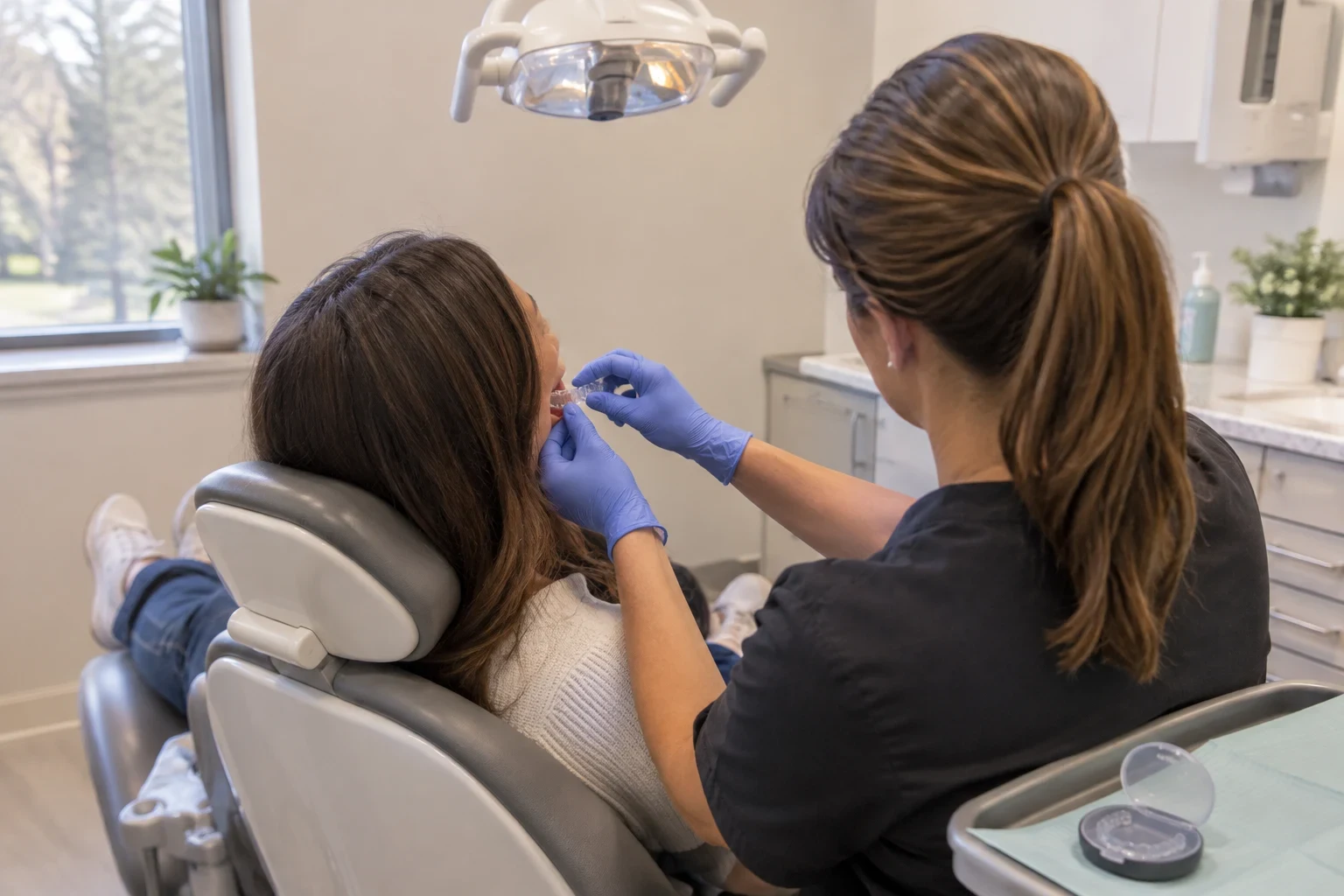
Each aligner is a thin, custom-cut plastic tray that nudges a few teeth a fraction of a millimeter before you swap to the next one. Before anything is ordered, we check your gums, bite and existing dental work, then walk you through the projected result, timeline and cost.
How clear aligners move teeth
Each aligner tray is shaped slightly differently from your teeth as they sit today. Worn about 20 to 22 hours a day, that small mismatch puts light, steady pressure on the tooth. The bone around the root remodels, and the tooth shifts. After a set period you switch to the next tray, and the process repeats.
Some movements need extra grip. For those we bond small tooth-colored composite bumps, called attachments, to selected teeth so the plastic has something to push against. Where teeth are tightly crowded, we may smooth a sliver of enamel between them to make room. Both steps are planned in advance on the digital model, not decided on the fly.
Aligners work well for many adults and older teens with crowding, spacing or mild bite problems. They are a poor fit if you have active decay or gum disease, so we treat those first and plan the straightening around them. Patients come to us from Webster, Auburn, Charlton and nearby towns for this kind of planned, staged treatment.
What aligner treatment includes
Bite and gum evaluation
We look at how your upper and lower teeth meet, check gum pockets and take X-rays. Bone and gum health decide how far teeth can safely move.
Digital scan instead of goop
A handheld scanner records your teeth in 3D. That scan builds the treatment model and the trays, so there is no tray of impression putty to bite into.
Projected result and tray count
You see the planned movement on screen, along with an estimate of how many trays and how many months it should take. This is when we discuss cost and insurance, before anything is ordered.
Attachments and spacing work
If your plan calls for attachments or enamel smoothing, we place them at the start. Attachments are polished off at the end.
Progress checks
Short visits every several weeks let us confirm teeth are tracking with the plan. If one lags, we can order refinement trays to finish the movement.
Retainers after treatment
Teeth tend to drift back without support, especially in the first year. We fit retainers and explain how often to wear them long term.
Signs clear aligners may be worth discussing
Crowded lower front teeth
Overlapping teeth trap plaque in spots a toothbrush and floss can't reach well. That raises the risk of decay and gum inflammation between them.
Gaps that catch food
Spaces between teeth can let food pack into the gums. Closing them often makes cleaning easier and can stop the sore spot after meals.
Uneven wear or chipped edges
When teeth meet at the wrong angle, a few teeth absorb most of the force. Flat, chipped or worn edges are a common clue.
Crowding that has crept back
Many adults had braces as kids and stopped wearing a retainer. If teeth have shifted, aligners can often correct a relapse in fewer trays.
Planning a crown or bridge
Straightening first can give a better angle for future work. We sometimes plan aligners ahead of Crowns & Bridges for that reason.
From first visit to retainer
- 1
Exam, X-rays and scan
The first visit covers a check of your gums and bite, a set of X-rays and a 3D digital scan, plus a conversation about what you would like to change. If a cleaning or filling is needed, we book it ahead of the aligners.
- 2
Review your plan
We walk you through the 3D projection, the expected number of trays and the total cost. You get a clear picture of insurance coverage and payment options before you decide.
- 3
Fitting day
We bond any attachments, seat your first trays and show you how to put them in and take them out. Expect some pressure for a day or two with each new tray.
- 4
Wear, switch and check in
You change trays on schedule and come in for periodic checks. Remove the trays to eat or drink anything besides water, and brush before putting them back.
- 5
Finish and retain
Once teeth reach the planned position, we remove attachments, polish the enamel and fit retainers. Some patients add teeth whitening at this stage.
What affects the cost of aligners
The price of aligner treatment follows the amount of tooth movement and the number of months it takes. Once your scan is done and we have reviewed the plan together, you get the full figure, so the number is settled before the first tray is ordered. Our office accepts most dental insurance plans, and the CareCredit Patient Payment Plan is available if you would rather spread payments over time.
- Complexity of the movement
- A single small gap closes in far fewer trays than a crossbite or several rotated teeth. Each added tray and month raises the total.
- Work needed first
- Cavities, gum treatment or a cracked tooth have to be handled before aligners go in. Those visits are billed separately from the aligner fee.
- Refinements
- Some teeth need extra trays to reach their final position. We explain how refinements fit into your plan before you start.
- Orthodontic benefits and coverage
- Some insurance plans carry an orthodontic benefit, often with a lifetime maximum and an age limit. We confirm what yours pays before treatment begins. Patients without any dental insurance can look into our Office Dental Plan for patients without insurance.
- Retainers
- Retainers are what hold the result in place. Ask how they are counted in your total so the last visit brings no surprises.
Clear aligner questions
Something not covered here? (508) 625-9288
How long does aligner treatment take?
Minor spacing or crowding can finish in several months. More involved bite corrections often take a year or longer. Your projected tray count gives a realistic estimate at the planning visit.
Do aligners hurt?
A new tray usually feels snug, and your teeth may be tender for the first day or two. That soreness comes from the light pressure moving the roots, and it fades as the tray settles. Soft foods and an over-the-counter pain reliever are usually enough to get through it.
What happens if I don't wear them enough?
Teeth stop tracking with the plan, and the next tray won't seat fully. That can add refinement trays and time. Wearing them about 20 to 22 hours a day keeps treatment on schedule.
Can I get aligners if I have crowns or fillings?
Usually, yes. Attachments bond best to natural enamel, so we plan around existing crowns and large fillings. We check each one during the exam.
Will my insurance pay for clear aligners?
That comes down to whether your plan includes an orthodontic benefit and whether it has an age limit. We look over your coverage before any trays are ordered. Without insurance, our Office Dental Plan and CareCredit are two options worth asking about.
See your aligner plan before you commit
Start with an exam and scan, then look over the projected result, timeline and cost. Make an appointment by phone and we'll find a time that works.